Web Development 2025: AI-Powered Low-Code Dominance and the Rise of the Metaverse Web
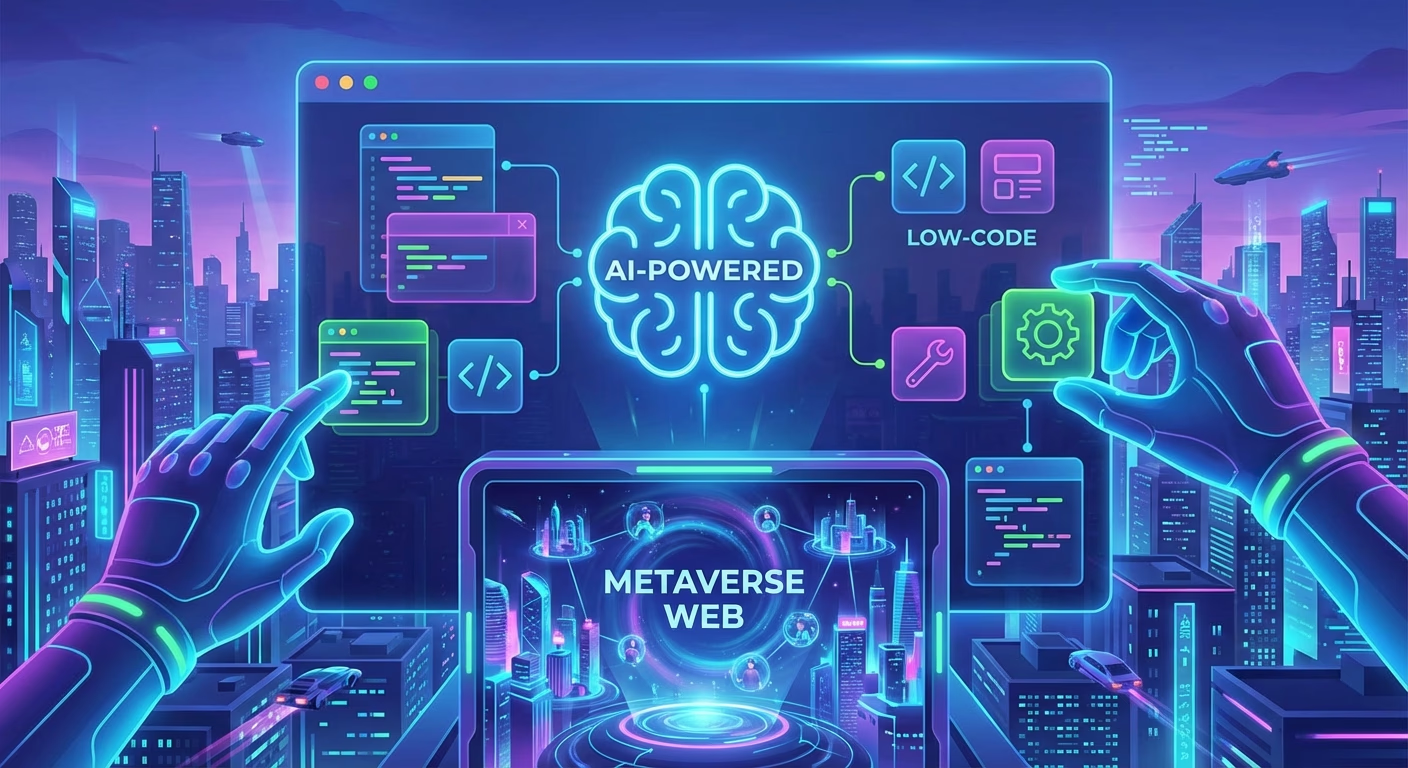
The digital landscape is constantly evolving, and web development is at the forefront of this change. Looking ahead to 2025, several key trends are poised to reshape the industry, influencing how websites and web applications are built, deployed, and experienced. We're on the cusp of a new era, one marked by increased automation, the democratization of development, and the emergence of immersive web experiences.
The Reign of AI-Powered Low-Code/No-Code Platforms
The most significant shift will undoubtedly be the continued rise and increasing sophistication of low-code/no-code (LCNC) platforms. While these platforms have already gained considerable traction, 2025 will see them become truly indispensable, especially for small and medium-sized businesses (SMBs). Fueling this growth is the integration of Artificial Intelligence (AI). Expect to see AI-powered features that go beyond simple drag-and-drop interfaces.
Imagine an AI assistant that can understand natural language requests like, "Create a landing page for my new product launch with a video section, customer testimonials, and a call-to-action button leading to the pricing page." The AI would then automatically generate the page, suggest optimal layouts, write compelling copy based on your brand guidelines, and even perform A/B testing to optimize for conversions. This level of automation dramatically reduces the time and technical skills required for web development, enabling citizen developers to create sophisticated web applications without writing a single line of code.
Furthermore, AI will enhance the debugging process, proactively identifying potential issues and suggesting solutions. Code generation will become more intelligent, producing cleaner, more efficient code that adheres to best practices. This isn't to say traditional coding will disappear; rather, LCNC platforms will handle the repetitive and mundane tasks, allowing developers to focus on complex problems and custom solutions that require deeper technical expertise.
The Metaverse Web: Blurring the Lines Between Physical and Digital
The metaverse, while still in its nascent stages, presents a significant opportunity for web developers. 2025 will see the emergence of the "Metaverse Web," a collection of interconnected virtual experiences accessible through web browsers and AR/VR devices. This requires a new skillset and a different approach to web development.
Developers will need to be proficient in technologies like WebXR, A-Frame, and Three.js to create immersive 3D environments and interactive experiences. The focus will shift from designing static web pages to building dynamic, interactive worlds. Consider e-commerce: instead of browsing product images, users could virtually walk through a store, interact with products in 3D, and even try them on using augmented reality. This creates a more engaging and personalized shopping experience.
Furthermore, the Metaverse Web will demand new forms of user authentication and data management. Decentralized identity solutions and blockchain technology will play a crucial role in ensuring security and privacy in these virtual environments. Web developers will need to understand and implement these technologies to build trustworthy and reliable metaverse experiences.
The Continued Importance of JavaScript and its Ecosystem
Despite the rise of LCNC platforms, JavaScript will remain the dominant language for web development in 2025. Its versatility and the vast ecosystem of frameworks and libraries like React, Angular, and Vue.js make it indispensable for building complex and interactive web applications. However, we'll likely see further evolution and specialization within the JavaScript ecosystem.
Frameworks will become more modular and adaptable, allowing developers to choose the specific components they need for their projects. Serverless JavaScript will gain even more prominence, enabling developers to build scalable and cost-effective applications. TypeScript, a superset of JavaScript that adds static typing, will continue to gain popularity as developers seek to improve code quality and maintainability.
Accessibility and Inclusivity as Core Principles
Accessibility will no longer be an afterthought but a core principle of web development in 2025. Regulations like the Americans with Disabilities Act (ADA) are driving increased awareness and enforcement. Developers will need to be proficient in creating websites and web applications that are accessible to users with disabilities, including those with visual, auditory, motor, and cognitive impairments.
This involves adhering to the Web Content Accessibility Guidelines (WCAG) and using assistive technologies like screen readers to test and validate accessibility. AI will also play a role in automating accessibility testing and suggesting improvements. Furthermore, developers will need to consider inclusivity in their design choices, ensuring that their websites are usable and enjoyable for people of all backgrounds and abilities.
The Rise of Edge Computing and Serverless Architectures
User expectations for speed and performance are constantly increasing. Edge computing, which brings computation and data storage closer to the user, will become increasingly important in delivering faster and more responsive web experiences. By processing data closer to the edge, latency is reduced, and bandwidth is conserved, resulting in improved performance for users, especially those with slow or unreliable internet connections.
Serverless architectures, which allow developers to build and run applications without managing servers, will also gain further traction. Serverless computing simplifies deployment and scaling, allowing developers to focus on writing code rather than managing infrastructure. This combination of edge computing and serverless architectures will enable developers to build highly scalable and performant web applications that can adapt to changing user demands.
Conclusion
Web development in 2025 will be characterized by increased automation, the democratization of development, and the emergence of immersive web experiences. AI-powered LCNC platforms will empower citizen developers to create sophisticated web applications. The Metaverse Web will offer new opportunities for building interactive and engaging virtual experiences. JavaScript will remain the dominant language, but its ecosystem will continue to evolve. Accessibility and inclusivity will be core principles, and edge computing and serverless architectures will improve performance and scalability. Web developers who embrace these trends will be well-positioned to thrive in the ever-changing digital landscape.